
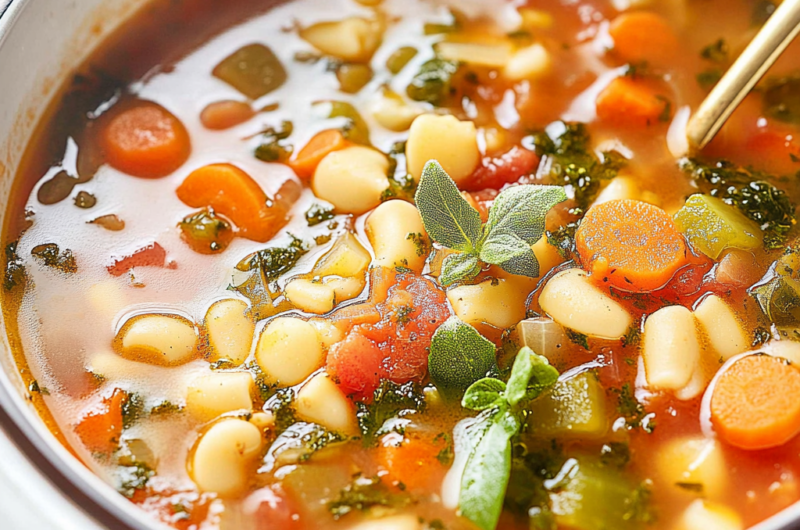
Minestrone Soup is a classic Italian dish that warms the heart and delights the palate. It’s packed with nutritious vegetables, hearty beans, and tender pasta. This versatile soup can adapt to the seasons and your pantry’s contents. Whether you want a light summer version or a rich winter bowl loaded with root vegetables, minestrone delivers comfort in every spoonful. The beauty of minestrone lies in its flexibility; you can customize it to fit any dietary preference or seasonal ingredient availability.
The foundation of a great minestrone is its base of fresh vegetables. Ingredients such as carrots, celery, and zucchini provide essential vitamins while imparting flavor. Beans add protein and fiber, making this dish filling and wholesome. Moreover, including various herbs enhances the complexity of flavors without adding extra calories. This recipe not only satisfies hunger but also promotes overall well-being.
In this article, I’ll guide you through the essential ingredients needed to create your perfect pot of minestrone soup followed by step-by-step preparation instructions to ensure your success in the kitchen. Finally, I will share some tips on serving and storing this delicious dish so you can enjoy it throughout the week.
Main Ingredients for Minestrone Soup
Fresh Vegetables for Minestrone Soup
Fresh vegetables are the cornerstone of any delicious minestrone soup recipe. Commonly used veggies include carrots, celery, onions, zucchini, and green beans. These ingredients contribute both flavor and nutritional value to the soup. Carrots add natural sweetness; celery brings a slight crunch; onions provide aromatic depth; zucchini adds creaminess when cooked down; while green beans offer vibrant color and texture.
For an authentic touch, try using seasonal vegetables from your local market. Not only will they elevate your dish’s flavor profile but also ensure freshness in every bite. Aim for about four cups of chopped vegetables total to create a well-balanced mix for your minestrone.
Canned Tomatoes for Minestrone Soup
Canned tomatoes are essential for building the rich base of your minestrone soup. They provide acidity which balances out the sweetness from other vegetables while adding depth to the flavor profile. When choosing canned tomatoes, opt for whole peeled tomatoes or diced varieties depending on your texture preference.
Use about two cups of canned tomatoes for this recipe—this amount will ensure a robust tomato backdrop without overpowering other ingredients. For extra flavor complexity, consider using fire-roasted canned tomatoes which add a smoky note to your final dish.
Beans
Beans are a vital source of protein in minestrone soup making them indispensable to this recipe’s heartiness. You can use any variety such as cannellini beans (white kidney beans), kidney beans or even chickpeas if you prefer something different. Aim for about one can or two cups of cooked beans in total for optimal nutrition.
Rinse canned beans thoroughly before adding them to your pot to remove excess sodium or preservatives that may affect taste quality. If you’re feeling adventurous or have time on hand—cooking dried beans from scratch adds an additional layer of flavor!
Pasta
Pasta serves as another key ingredient that transforms minestrone into an incredibly satisfying meal option! Small shapes like ditalini or elbow macaroni work best since they mix easily with all other components without overwhelming them.
Cook about one cup of dry pasta separately until al dente before incorporating it into your finished soup; doing so prevents mushiness once combined later on! Remember that pasta absorbs liquid over time—so adjust broth levels accordingly especially if storing leftovers for later use!
Herbs and Spices
Herbs play an essential role in enhancing flavor complexity within any homemade minestrone soup recipe! Common choices include fresh basil leaves (or dried), oregano (dried works better here) alongside bay leaves which impart subtle warmth throughout cooking time.
Use around two teaspoons each dried oregano & basil while adding one bay leaf during simmering phase then remove before serving! Feel free also experiment further with red pepper flakes if desired heat level increases—just remember start small since they pack quite punch!

How to Prepare Minestrone Soup
Step 1: Prepare Your Vegetables
Begin by washing all fresh produce thoroughly under cool running water to remove dirt residue that might linger post-harvest! Once cleaned up—chop onions into small pieces ensuring even cooking times later on followed by dicing carrots & celery sticks uniformly sized so flavors meld nicely together throughout process ahead!
Next up—zucchini should be sliced into half-moons while trimming green beans down into bite-size segments—ensuring each piece sits comfortably within spoonfuls served later on dinner plates! Set aside prepared veggies until ready combine everything else in large pot shortly after starting heating process up below.
Step 2: Sauté Aromatics
In a large pot over medium heat add olive oil allowing it warm slightly then toss chopped onions straight away stirring occasionally until they soften about five minutes max before introducing diced carrots & celery too!
Continue sautéing this aromatic blend until fragrant (another few minutes) helping release natural sugars present veggies enhancing overall taste profile dramatically moving forward into next stages ahead! Once done transitioning onto adding canned tomatoes followed by rinsed beans ensuring no additional liquid remains inside cans themselves.
Step 3: Build Flavor Base
Stir everything together well ensuring all ingredients coated evenly olive oil mixture earlier created then slowly pour vegetable broth into pot bringing mixture up temperature gradually until bubbling occurs—this process should take around ten minutes total give/take depending stove power output levels at home!
At this point sprinkle dried herbs mentioned earlier directly over top stirring once more allowing them infuse fragrant aromas throughout entire batch simmering away now letting flavors meld beautifully before turning down heat slightly towards low-medium range continuing cook time anywhere between twenty-thirty minutes longer if desired richer tones emerge fully developed across board yielding truly unforgettable dining experience!
Step 4: Add Pasta
When nearing end cooking phase (about twenty-five minutes elapsed mark) check consistency closely gauging how much thicker sauce has become thus far knowing it’s almost complete! Now’s perfect moment introduce pre-cooked pasta incorporating gently mixing through rest components awaiting final touches ahead next couple steps remaining till serving day arrives shortly thereafter!
Allow mixture bubble gently again letting everything cook together another five minutes ensuring pasta heats adequately blending seamlessly alongside remaining flavors surrounding dish overall creating satisfying texture palate delightfully balanced perfectly wholesome too!
Step 5: Taste Test & Adjust Seasonings
Final stage involves tasting test adjusting seasonings according personal preferences based upon previous experiences shared among family friends whenever possible home cooking adventures unfold each week/weekend across seasons changing yearly traditions evolving modern-day recipes passed down generations past bringing everyone closer together again reminding us what matters most life revolves around love food moments shared together collectively enjoying simple pleasures daily basis nourishing souls spirits alike alike along way too often forgotten amidst hustle bustle busy lives we lead nowadays constantly rushing forward without pause reflection back appreciating little things matter most ultimately leading healthier happier lives every single day anew offering gratitude gifts given freely universe generously providing abundance found everywhere around us just waiting discover hidden gems tucked away corners life beyond imagination itself waiting uncover joy boundless nature existence itself present moments fully alive aware surroundings taking deep breaths experiencing reality pure bliss transcending daily routines finding solace peace tranquility even amidst chaos swirling outwardly all along journey shared memories cherished forever captured hearts minds alike leaving lasting impressions long after events fade away quiet past behind us…

Serving and Storing Tips for Minestrone Soup
Serving Suggestions
Minestrone Soup is best served warm right off the stove garnished with freshly grated Parmesan cheese if desired alongside crusty bread slices placed nearby enhance enjoyment further still encourages dipping bread pieces directly into bowls savor every mouthful completely satisfied experience achieved ultimately reaching fullness effortlessly over time indulging senses enriching lives immeasurably greater than anticipated beforehand simply relishing creations made home kitchens worldwide bringing families together sharing memories cherished forevermore!
Storage Instructions
If you have leftover Minestrone Soup, you’re in luck! Store it in airtight containers, and it’ll stay fresh for up to three days in the fridge. Simply reheat on the stovetop or in the microwave for a comforting meal whenever the craving hits. Leftovers bring back memories, connect us to tradition, and offer a reminder of the joy that sharing a meal can bring—nourishing not just the body, but the soul. Enjoy every spoonful as part of a timeless journey of flavor and togetherness.
Your Next Meal Idea Starts Here
Homemade Tomato Soup
Mistakes to avoid for Minestrone Soup
Overcooking the Vegetables
One of the most common mistakes when preparing minestrone soup is overcooking the vegetables. While it’s essential to cook the veggies until they’re tender, overcooking them can lead to a mushy texture that detracts from the dish’s overall appeal. To prevent this, add firmer vegetables like carrots and potatoes first and allow them to cook for a bit before adding softer options such as zucchini and spinach. Maintain a watchful eye on cooking times, ensuring you remove the soup from heat once all ingredients are tender yet vibrant.
Neglecting Seasoning
Seasoning is crucial in any soup recipe, especially in minestrone. Failing to season adequately can result in a bland dish that doesn’t do justice to its rich culinary heritage. Start by seasoning your soup at different stages—add salt and pepper early on, then adjust towards the end for a balanced flavor. Additionally, incorporating fresh herbs like basil or thyme enhances depth and complexity. Remember that taste-testing throughout the cooking process is key; it allows you to adjust flavors according to your preference.
Using Low-Quality Ingredients
The quality of ingredients directly impacts your minestrone soup’s flavor and texture. Using low-quality canned tomatoes or wilted vegetables can ruin the entire dish. Always opt for fresh, seasonal produce when possible. If using canned items, choose high-quality brands with minimal additives. Fresh herbs should also be vibrant and fragrant, as they contribute significantly to the soup’s aroma and flavor profile. Investing in good ingredients will elevate your minestrone soup from ordinary to extraordinary.

Uncover More Delicious Recipes
Carrot Soup with Coco Milk
Tips and tricks for Minestrone Soup
Choosing the Right Base
The foundation of any great minestrone soup lies in its base. Opt for a high-quality vegetable or chicken broth as your starting point. This choice sets the tone for the entire dish, providing a robust flavor profile that enhances all other ingredients. You can even make your own broth from scratch by boiling leftover vegetable scraps or bones for added depth. Alternatively, adding a splash of white wine during cooking can elevate flavors further while keeping it light and refreshing.
Incorporating Varied Textures
A delightful minestrone soup features various textures that make each spoonful exciting. To achieve this, consider incorporating grains like quinoa or pasta alongside the vegetables. Cooking these elements separately before adding them to the soup helps maintain their integrity rather than letting them absorb excess liquid and become mushy. Additionally, garnishing with freshly grated Parmesan cheese or croutons adds an excellent crunch that complements the soft veggies perfectly.
Mindful Cooking Times
Timing is everything when making minestrone soup, especially regarding ingredient additions. Each vegetable has its ideal cooking time; adding them all at once leads to unevenly cooked components. Start with heartier ingredients like onions and carrots before gradually introducing softer ones such as green beans and leafy greens. This approach ensures every ingredient retains its unique flavor and texture while contributing harmoniously to the final product.
Treat Yourself to More Flavorful Dishes
Berry Crumble with Fresh Berries
Suggestions for Minestrone Soup
Customizing Ingredients
Minestrone soup is highly versatile, allowing you to customize it based on personal preferences or what’s available in your pantry. Feel free to swap out traditional ingredients for those you enjoy more—if you’re not fond of beans, try lentils instead; if you prefer a spicier kick, add some red pepper flakes or diced jalapeños. The beauty of this dish lies in its adaptability; experiment with different combinations until you find your perfect blend.
Making It Ahead of Time
Preparing minestrone soup ahead of time not only saves you effort during busy weeknights but also enhances its flavors as it sits. Allowing time for flavors to meld results in an even richer taste experience when reheated later on. Store leftover portions in airtight containers in the refrigerator for up to three days or freeze them for longer storage without losing quality; just remember to leave some space at the top of each container since liquids expand when frozen.
Serving Suggestions
When serving minestrone soup, consider pairing it with crusty bread or a light salad for a complete meal experience that satisfies both hunger and palate alike! A sprinkle of grated cheese right before serving adds richness while contrasting beautifully against fresh herbs sprinkled atop each bowlful—this not only elevates presentation but rounds out flavors magnificently too! Enjoy your delicious homemade creation accompanied by loved ones gathered around table sharing warmth together!
Cooking Made Fun with These Recipes
Apple Pie
FAQs for Minestrone Soup:
What ingredients are typically used in Minestrone Soup?
Minestrone soup is a versatile dish that can include a variety of vegetables, beans, and pasta. Common vegetables include carrots, celery, onions, zucchini, and tomatoes. You can also add leafy greens like spinach or kale for extra nutrition. Beans such as cannellini or kidney beans provide protein and fiber. Some recipes incorporate small pasta shapes like ditalini or elbow macaroni. Additionally, herbs like basil, oregano, and thyme enhance the flavor profile of the soup. The beauty of minestrone lies in its adaptability; you can use seasonal vegetables or whatever you have on hand to create a delicious meal.
Can I make Minestrone Soup ahead of time?
Yes, you can definitely prepare minestrone soup ahead of time! In fact, many people find that the flavors develop and improve after a day in the fridge. To store it properly, let the soup cool completely before transferring it to an airtight container. It should keep well in the refrigerator for about three to four days. If you plan to freeze it, consider holding off on adding any pasta until you’re ready to serve it. This prevents the pasta from becoming mushy during freezing and reheating.
Is Minestrone Soup healthy?
Minestrone soup is generally considered a healthy option due to its high vegetable content and low-calorie ingredients. Packed with vitamins, minerals, and fiber from various vegetables and legumes, this soup can be quite filling without being heavy on calories. You can also control the ingredients to ensure it’s low in sodium by using homemade broth or limiting added salt. If you prefer a heartier version, using whole grain pasta or adding more beans will boost its nutritional value further.
Can I customize my Minestrone Soup recipe?
Absolutely! One of the great things about minestrone soup is its flexibility. You can easily tailor it to fit your dietary preferences or what you have available in your pantry. If you’re vegetarian or vegan, simply skip any meat-based broth and use vegetable stock instead. For added protein, consider incorporating lentils or chickpeas. Feel free to swap out any vegetables based on seasonality; for example, use butternut squash in the fall or peas in the spring.
What is the best way to serve Minestrone Soup?
Minestrone soup can be served in various ways depending on personal preference. Many enjoy it hot with a sprinkle of fresh herbs like parsley or basil on top for added flavor. You can serve it alongside crusty bread or garlic bread for dipping; this makes for a satisfying meal. For an elegant touch, consider drizzling some olive oil over each bowl just before serving. This not only enhances flavor but also adds a beautiful finish.
How do I store leftover Minestrone Soup?
To store leftover minestrone soup effectively, allow it to cool down before transferring it into airtight containers. You can keep it refrigerated for three to four days without sacrificing freshness if stored properly. If you want to keep it longer than that, freezing is an excellent option; just make sure to leave out any pasta until you reheat it later. When reheating frozen soup, thaw it overnight in the refrigerator before warming it up on the stove or microwave.
Find New Favorite Flavors Here
Buttermilk Pancakes with Maple Syrup Apples
Kitchen Note (Recently Updated): We recently re-tested this reader-favorite recipe in our test kitchen to refine the ingredient ratios and cooking times, ensuring rich flavor and foolproof results every single time you make it!
Conclusion for Minestrone Soup:
In summary, minestrone soup offers both versatility and nourishment in one delightful bowl. With its rich blend of seasonal vegetables, beans, and optional pasta additions, it’s easy to customize according to your taste preferences and dietary needs. Making this dish ahead of time not only saves you effort but also enhances flavor complexity as it sits overnight in your refrigerator.
Healthy and filling without being overly caloric, minestrone is perfect for families looking for wholesome meal options that are simple yet satisfying. Whether served hot with crusty bread or garnished with fresh herbs and olive oil drizzle, this soup never fails to impress.
Ultimately, whether you’re enjoying a homemade version or trying out different variations at restaurants, minestrone remains a beloved staple across cultures—celebrated not just for its taste but also for its adaptability as an everyday dish.
Print
Delicious Minestrone Soup Recipe for All Seasons
- Total Time: 45 minutes
- Yield: Serves 6
Description
Minestrone Soup is a vibrant, hearty Italian classic that beautifully combines seasonal vegetables, protein-rich beans, and tender pasta in a flavorful broth. This comforting dish not only warms the soul but also provides a nutritious meal option for any occasion. Perfect for cozy dinners or meal prep, minestrone is versatile—easily adaptable to whatever ingredients you have on hand. With its rich flavors and satisfying textures, every bowl promises to delight your taste buds while nourishing your body.
Ingredients
4 cups fresh chopped vegetables (carrots, celery, zucchini, green beans)
2 cups canned tomatoes (whole or diced)
1 can (15 oz) beans (cannellini or kidney)
1 cup dry small pasta (ditalini or elbow macaroni)
4 cups vegetable broth
Fresh herbs (basil, oregano)
Instructions
1. Prepare your vegetables by washing and chopping them into uniform pieces.
2. In a large pot, heat olive oil over medium heat and sauté onions until soft. Add carrots and celery; cook until fragrant.
3. Stir in canned tomatoes and rinsed beans. Pour in vegetable broth and add dried herbs.
4. Bring to a simmer for 20-30 minutes to meld flavors.
5. Near the end of cooking, add pre-cooked pasta and adjust seasonings as desired.
Notes
Customize with seasonal veggies or different types of beans.
To enhance flavor, consider adding a splash of white wine to the broth.
- Prep Time: 15 minutes
- Cook Time: 30 minutes
Nutrition
- Calories: 220
- Fat: 5g
- Carbohydrates: 35g
- Protein: 10g